

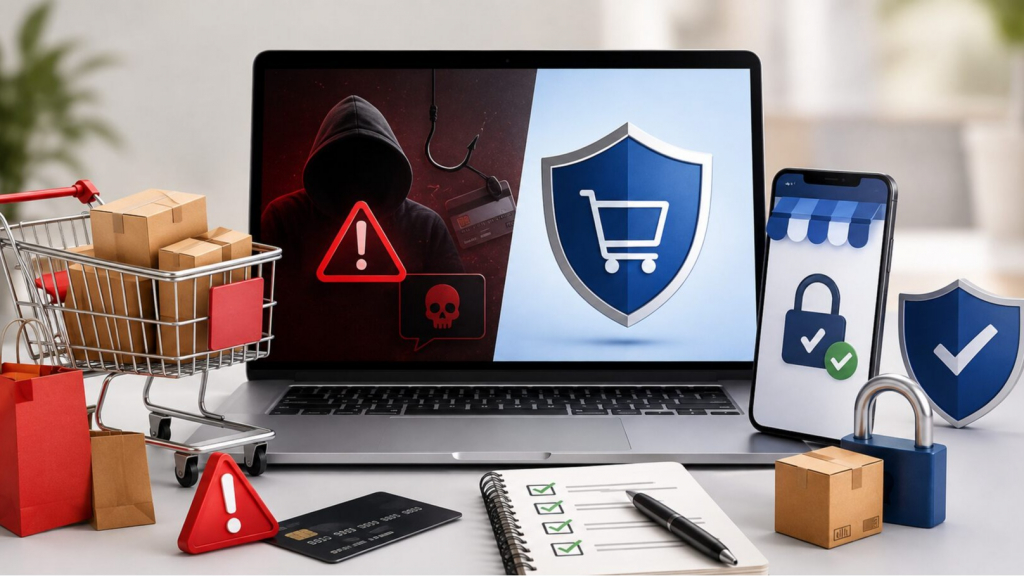
Online shopping has transformed the way people purchase products. From electronics and fashion to groceries, home essentials, and personal accessories, consumers can now browse thousands of products from the comfort of their homes. Online marketplaces have made shopping faster, more convenient, and often more affordable. However, the growth of e-commerce has also attracted scammers who use deceptive websites, fake offers, fraudulent payment methods, and misleading advertisements to trick unsuspecting shoppers.
Understanding the common online shopping scams is one of the best ways to protect yourself while shopping online. Although many online stores are legitimate and use secure systems to protect customers, not every website, seller, or deal can be trusted. Scammers often create convincing websites and promotions that appear genuine at first glance.
Whether you shop occasionally or regularly, knowing about the common online shopping scams can help you make safer purchasing decisions. By learning how these scams work and following simple security practices, you can enjoy the convenience of online shopping while reducing the chances of becoming a victim.
This guide explains the most common online shopping scams, how they work, and the practical steps you can take to avoid becoming a victim.
Why Are Online Shopping Scams Increasing?
The popularity of online shopping has created more opportunities for cybercriminals and dishonest sellers. Many people now shop using smartphones, social media platforms, search engines, and online marketplaces. This provides scammers with multiple ways to reach potential victims.
Scammers often take advantage of shoppers who are searching for low prices or limited-time deals. They may use attractive discounts to create a sense of urgency, encouraging people to make quick purchases without checking the seller carefully.
Some scams involve fake websites, while others use genuine platforms but feature dishonest sellers or fraudulent advertisements. In many cases, scammers use professional-looking logos, product photos, customer reviews, and payment pages to make their operations appear legitimate.
The good news is that most online shopping scams can be avoided by taking a few simple precautions and learning to recognize warning signs.
Common online shopping scams and how to avoid them
Below is a list of frequent scams you’re likely to encounter and the exact steps you can take to reduce risk.
1. Fake Online Shopping Websites
One of the most common online shopping scams involves fake e-commerce websites. These websites are designed to look like legitimate online stores. They may feature attractive product images, professional layouts, discount banners, and even fake customer reviews.
A shopper may place an order and make a payment, only to discover that the product never arrives. In some cases, the website may collect personal and payment information and then disappear.
How to Avoid This Scam
Before buying from an unfamiliar website:
- Check whether the website uses a secure connection.
- Look for clear contact information, including a physical address or customer support details.
- Search for independent reviews about the company.
- Check the website's return, refund, and shipping policies.
Be cautious if the website appears to have been recently created or lacks basic business information.
Avoid websites that contain numerous spelling errors, broken links, or poorly written product descriptions.
A professional-looking website is not automatically proof that a business is legitimate. Always conduct additional research before making a purchase.
2. Unrealistic Discounts and Too-Good-to-Be-True Deals
Everyone loves a bargain, but extremely low prices can sometimes be a warning sign. Scammers frequently advertise expensive products at prices that are far below normal market value.
For example, a new smartphone, laptop, or branded appliance may be offered at an unusually low price. The purpose is often to make shoppers act quickly without asking questions.
These scams may involve counterfeit products, non-delivery, hidden charges, or attempts to collect payment information.
How to Avoid This Scam
Compare the price with several reputable retailers. If a product normally sells for a certain price and one unknown seller offers it at a dramatically lower price, investigate carefully.
A discount can be genuine, especially during seasonal sales, clearance events, or promotional campaigns. However, an unbelievable deal should encourage you to research more, not rush into a purchase.
3. Fake Online Stores Promoted Through Social Media
Social media platforms have become a popular place to discover products. Unfortunately, scammers also use social media advertisements and fake business pages to promote fraudulent stores.
A fake store may post attractive product images and offer exclusive discounts. After clicking the advertisement, shoppers may be directed to a website that collects payment but never delivers the product.
Some scammers also create fake social media accounts that imitate real brands.
How to Avoid This Scam
Do not assume that an advertisement on a social media platform guarantees that the seller is legitimate. Before purchasing:
- Visit the company's official website independently.
- Check whether the social media account has a genuine history.
- Look for consistent customer interactions and reviews.
- Be cautious of accounts created recently with very few followers.
- Avoid sellers who insist on unusual payment methods.
Social media can be useful for discovering products, but it should not replace basic research.
4. Counterfeit or Fake Products
Counterfeit products are another major online shopping problem. Fake products may be designed to look like popular branded items but are made with inferior materials or components.
Counterfeit electronics can be particularly risky. Fake chargers, batteries, headphones, memory cards, and other accessories may not meet appropriate safety or quality standards.
Consumers may also purchase fake cosmetics, clothing, shoes, watches, and other products without realizing they are counterfeit.
How to Avoid This Scam
Read product descriptions carefully and check seller information before ordering. Look for genuine reviews and examine product images critically. If the product packaging, branding, or specifications appear inconsistent, consider choosing another seller.
Shopping through established and trustworthy marketplaces can also help reduce the risk of receiving counterfeit goods. Platforms such as Smash Deals provide consumers with a convenient online shopping environment where they can explore products and compare available options.
5. Phishing Emails and Fake Order Notifications
Scammers often send fake emails or text messages claiming to be from an online store, delivery company, or payment service.
A typical message may say:
- "Your order could not be delivered.”
- "Your payment has failed.”
- "Confirm your shipping address.”
- "Your account will be suspended.”
- "Click here to claim your refund.”
The message usually includes a link designed to steal login details, payment information, or personal data.
How to Avoid This Scam
Do not click suspicious links in unexpected emails or messages. Instead, open the shopping website or delivery service by typing the official address into your browser or using the official app.
Check the sender's email address carefully. Scammers often use addresses that look similar to legitimate companies but contain unusual characters or unrelated domains.
6. Fake Customer Reviews and Ratings
Customer reviews can be extremely helpful when shopping online, but scammers and dishonest sellers may manipulate reviews.
A product may have hundreds of positive ratings that are fake, paid for, copied from other websites, or generated automatically. Fake reviews can make poor-quality products appear trustworthy.
How to Avoid This Scam
Look for detailed reviews that discuss specific features, benefits, and problems. Be cautious when every review uses similar language or provides only vague praise.
You can also compare reviews across different platforms. A product with consistently positive feedback from independent sources is generally more trustworthy than one supported only by reviews on a single unfamiliar website.
7. Payment Scams
Payment scams occur when fraudsters persuade shoppers to pay through unsafe or unusual methods.
A scammer may request direct bank transfers, gift cards, cryptocurrency, or other payment methods that offer limited protection to buyers. Once the payment is sent, recovering the money may be extremely difficult.
How to Avoid This Scam
Use secure payment methods whenever possible. Avoid sending money directly to unknown individuals or businesses unless you have verified the seller thoroughly.
Never share your banking passwords, one-time passwords, PINs, or other confidential security information with anyone claiming to be a seller or customer service representative.
Legitimate businesses should not ask customers to disclose sensitive authentication codes.
8. Fake Giveaways and Prize Scams
Some online shopping scams are disguised as giveaways or prizes. You may receive a message saying that you have won a smartphone, shopping voucher, cash prize, or another valuable product.
To claim the prize, you may be asked to pay a processing fee or provide personal and financial information.
In many cases, there is no real prize.
How to Avoid This Scam
Be cautious if you do not remember entering a competition. Genuine promotions should provide clear information about the organizer and the terms of the competition.
Never pay money simply to claim an unexpected prize. Also, avoid sharing sensitive personal or financial information with unknown organizations.
9. Subscription and Hidden-Fee Scams
Some websites advertise a low-cost product but hide additional charges in the terms and conditions. A shopper may believe they are making a one-time purchase but later discover recurring subscription charges.
This can happen when a free trial or promotional offer automatically converts into a paid membership.
How to Avoid This Scam
Read the pricing information and terms carefully before completing a purchase. Look for phrases such as:
- Recurring billing
- Monthly subscription
- Automatic renewal
- Membership fee
- Trial period
Always check your bank or card statements after making online purchases so you can identify unexpected charges quickly.
10. Fake Delivery and Refund Scams
Scammers may impersonate delivery companies or online retailers and claim that a package requires an additional payment before delivery.
Others may pretend to process a refund and ask for banking details or account credentials.
How to Avoid This Scam
Verify delivery and refund information through the official retailer or courier website. Do not trust unexpected messages that demand urgent payment.
If you are expecting a package, check its status through the official order-tracking system rather than clicking links in suspicious messages.
Simple Tips for Safer Online Shopping
Recognizing the common online shopping scams is important, but developing good shopping habits is equally valuable.
1. Research the Seller
Before purchasing from an unfamiliar seller, search for information about the company. Look for reviews, business details, customer service information, and a clear refund policy.
2. Check the Website Address
Scammers may use website addresses that closely resemble legitimate brands. Carefully check the spelling of the domain before entering personal or payment information.
3. Use Secure Connections
Avoid entering sensitive payment information while using unsecured public Wi-Fi networks. If possible, use a trusted private connection when completing online transactions.
4. Keep Devices Updated
Regularly update your smartphone, computer, browser, and security software. Updates often include important security improvements.
5. Be Careful With Personal Information
A retailer may need certain information to process an order, but no legitimate shopping experience should require you to share unnecessary passwords, PINs, or one-time authentication codes.
6. Avoid Pressure to Buy Immediately
Scammers often use urgency to prevent shoppers from thinking carefully. Messages such as "Only five minutes left” or "Your account will be closed today” should encourage caution.
Take time to verify the offer before making a purchase.
What to Do If You Become a Victim of an Online Shopping Scam
Even careful shoppers can sometimes become victims. If you believe you have been scammed, act quickly.
Contact your bank or payment provider immediately if you made a fraudulent payment. Change your passwords if you shared login information. Monitor your financial accounts for suspicious activity.
You should also save evidence, including emails, messages, receipts, transaction records, website addresses, and screenshots. This information may be useful when reporting the incident to the relevant authorities or payment provider.
If you purchased from a marketplace, contact the platform's customer support team and report the seller or transaction.
Final Thoughts
Online shopping offers convenience, variety, and access to products from around the world, but consumers must remain alert to potential risks. From fake websites and counterfeit products to phishing messages and fraudulent payment requests, the common online shopping scams discussed in this guide can affect shoppers in many different ways.
The most effective protection is a combination of awareness, careful research, secure payment practices, and healthy skepticism. Always investigate unfamiliar sellers, be cautious of unrealistic offers, protect your account information, and avoid making rushed decisions.
A safe online shopping experience does not require avoiding e-commerce altogether. Instead, it requires making informed choices and using trusted platforms responsibly. Reputable online marketplaces such as Smash Deals prioritize secure shopping experiences by offering trusted sellers, transparent product information, and secure payment options, helping customers shop with greater confidence. By understanding how scams work and recognizing their warning signs, shoppers can enjoy the benefits of online shopping while significantly reducing the risk of fraud.

Share this via
Or copy link