

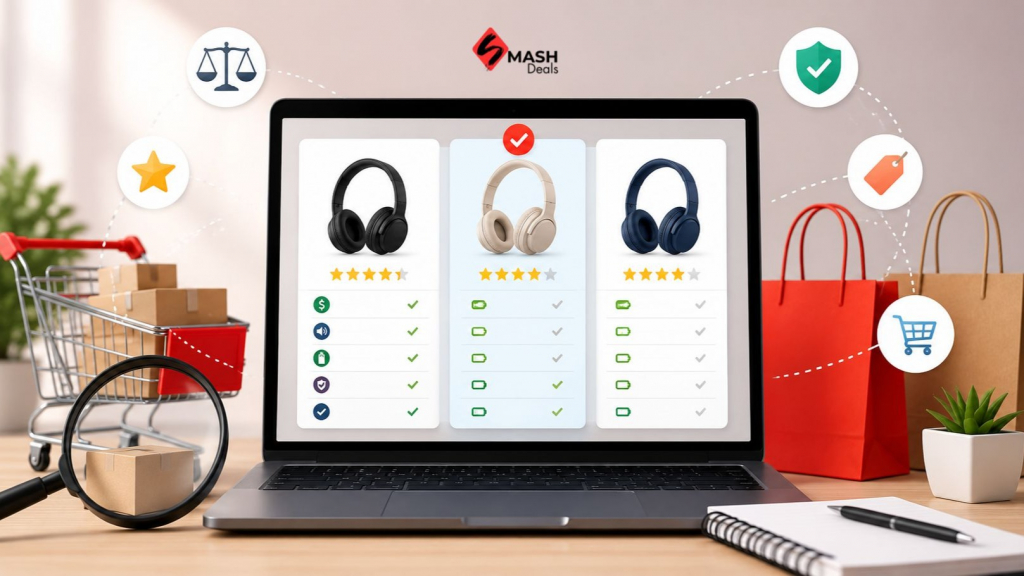
Online shopping has made it easier than ever to discover products, compare prices, and make purchases from the comfort of home. However, having hundreds of products to choose from can also make buying decisions more complicated. Two products may look almost identical but differ significantly in quality, features, price, warranty, or customer support.
That is why learning how to compare products before buying online is an important part of becoming a smarter shopper. Instead of choosing the first attractive listing or simply going for the lowest price, taking a few extra minutes to evaluate your options can help you find a product that genuinely matches your needs and budget.
For shoppers in South Africa, online platforms such as Smash Deals can make product discovery more convenient by helping consumers explore different products and make more informed purchasing decisions. As an online shopping platform, Smash Deals aims to support a better shopping experience by connecting shoppers with opportunities to discover products that suit their preferences.
Whether you are purchasing electronics, fashion, home essentials, beauty products, or everyday items, the following tips can help you make more confident buying decisions.
Why Is Product Comparison Important?
Product comparison is more than checking whether one item costs less than another. A cheaper product is not necessarily the better deal if it has fewer features, lower quality, limited warranty coverage, or higher long-term costs.
Comparing products allows you to look at several important factors side by side. These may include specifications, materials, functionality, customer reviews, seller information, delivery options, return policies, and overall value.
A thoughtful comparison can also reduce impulse purchases. Instead of buying based solely on attractive images, discounts, or promotional messages, you can focus on what actually matters to you.
This approach is an important part of smart online shopping, helping you spend your money more intentionally and choose products based on value rather than appearance alone.
10 Smart Tips for Comparing Products Online
1. Identify Your Needs Before Comparing Products
Before opening multiple product pages, determine exactly what you need.
For example, if you are shopping for a laptop, think about how you intend to use it. A student may prioritize portability and battery life, while someone working with demanding software may need a powerful processor, more RAM, and greater storage capacity.
Write down your essential requirements and optional preferences. This creates a clear starting point for your comparison.
Ask yourself:
- What will I primarily use the product for?
- Which features are essential?
- Which features would simply be nice to have?
- What size, quantity, or specifications do I need?
- How frequently will I use it?
Knowing your priorities prevents unnecessary features from influencing your decision.
2. Compare Specifications Carefully
Product specifications provide important information that product images and promotional descriptions may not reveal.
When comparing similar products, look closely at their technical specifications, dimensions, materials, capacity, compatibility, performance, or included accessories.
For example, two smartphones may both advertise impressive cameras, but their camera sensors, storage capacities, battery sizes, display technology, and processing capabilities could be different.
Create a simple mental or written comparison of the specifications that matter most. This makes it easier to identify genuine differences between products.
3. Look Beyond the Listed Price
Price is important, but it should not be the only deciding factor.
A product with a lower upfront price may not necessarily provide better value. Consider what you receive for the amount you pay.
Look at:
- Product quality
- Features
- Warranty
- Return conditions
- Expected durability
- Maintenance or replacement costs
For example, paying slightly more for a durable product with a stronger warranty could be more economical than purchasing a cheaper alternative that needs to be replaced sooner.
The goal should be to find the best overall value, rather than simply the lowest price.
4. Read Customer Reviews Carefully
Customer reviews can provide valuable insight into how a product performs in real-world situations.
Rather than reading only the first few reviews, look for recurring comments. If multiple customers mention the same strength or weakness, it may be worth considering.
Pay attention to comments about:
- Product quality
- Actual performance
- Size or fit
- Durability
- Packaging
- Delivery experience
- Whether the product matches its description
It is also useful to read both positive and negative reviews. A product with a few negative reviews is not automatically a bad choice. Instead, consider whether those complaints relate to issues that matter to you.
5. Check the Seller and Product Information
Before making a purchase, take a moment to review the available seller and product information.
Make sure the product description is clear and that important details such as size, colour, quantity, model number, or compatibility are provided.
If multiple sellers offer the same or similar product, compare their information as well. Look for transparency regarding delivery, returns, and other purchasing conditions.
This step can help reduce misunderstandings and make the buying process more predictable.
6. Compare Warranty and Return Policies
A product's warranty and return policy can become extremely important if something goes wrong after your purchase.
Before buying, check how long the warranty lasts and what it covers. For certain products, also determine whether repairs, replacements, or refunds are available under specific conditions.
Similarly, review the return policy carefully. Find out whether there are restrictions related to opened packaging, product condition, return periods, or shipping costs.
A product that appears inexpensive may become less attractive if it has limited support after purchase.
7. Check Delivery Costs and Estimated Times
The advertised product price does not always represent the final amount you will pay.
Before completing your purchase, check delivery charges and any other applicable costs. Also consider the estimated delivery time, particularly if you need the product by a specific date.
Two products with similar prices can have very different final costs once delivery is included.
Comparing the total purchase cost rather than just the displayed price gives you a more accurate idea of which option provides better value.
8. Compare Similar Products, Not Just Different Prices
Effective comparison works best when you evaluate products that serve the same purpose.
For instance, comparing a basic entry-level appliance with a premium model may not be useful unless you first understand what you actually need from the appliance.
Try to create a shortlist of products with similar intended uses. Then compare their features, quality, price, reviews, and additional benefits.
This makes your decision more meaningful because you are evaluating genuine alternatives rather than simply choosing between unrelated products.
9. Watch for Discounts Without Letting Them Decide for You
Online discounts can be useful, but they can also encourage impulse purchases.
A large percentage discount does not automatically mean that a product is the right choice. Before reacting to a sale price, ask whether you would still want the product without the discount.
Compare the discounted product with similar alternatives and consider its features and overall value.
Promotions should support your buying decision, not make the decision for you.
For shoppers exploring different deals and product options, Smash Deals can be a useful platform for discovering opportunities while keeping the focus on making informed shopping choices.
10. Take a Final Comparison Before Buying
Before clicking the final purchase button, conduct one last review.
Check the product specifications, final price, delivery charges, reviews, warranty, return policy, and seller information. Make sure you have selected the correct size, colour, model, quantity, or version.
Then ask yourself one simple question:
Does this product provide the combination of quality, features, and value that I actually need?
If the answer is yes, you are more likely to be making a considered purchase rather than an impulsive one.
Build Better Online Shopping Habits
Comparing products does not have to be complicated. In many cases, a few extra minutes of research can make a significant difference to the quality of your purchase.
The key is to avoid focusing on one factor in isolation. Price, reviews, specifications, seller information, delivery, warranty, and return policies all contribute to the overall value of a product.
It is also important to remember that the "best" product is different for every shopper. A premium product may be unnecessary for someone with basic requirements, while a budget option may not be suitable for someone who needs advanced performance or long-term durability.
Developing a consistent comparison routine makes it easier to make confident decisions over time.
Make Every Purchase a More Informed Decision
Online shopping should be convenient, but convenience should not mean rushing into a purchase. Taking time to compare products can help you understand your options, avoid unsuitable purchases, and get greater value from your budget.
From identifying your needs and comparing specifications to checking reviews, delivery costs, warranties, and return policies, each step contributes to a more informed buying decision.
As a platform focused on improving the online shopping experience, Smash Deals gives shoppers another way to discover products and explore their options. By combining convenient product discovery with thoughtful comparison habits, consumers can make shopping decisions that are better suited to their needs.
Ultimately, smart online shopping is about more than finding a deal. It is about understanding what you are buying, evaluating your alternatives, and choosing with confidence.
The next time you shop online, don't simply ask, "Which product is cheaper?" Ask, "Which product offers the best value for what I actually need?" That small change in approach can lead to smarter purchases and a better overall online shopping experience.

Share this via
Or copy link